
Concrete leveling in Indianapolis costs $500–$2,500 for most driveways, walks, patios, and garage slabs — about a third of replacement, finished in hours. Freeze-thaw heave plus spring washout is the metro's signature slab cycle; foam leveling refills the bed and closes the water routes that ran it.
The Indy slab cycle, the afternoon fix, and which sunken slabs are quietly foundation issues.
The freeze-jack, slump-back cycle
Indiana flatwork lives a seasonal drama. Winter: moisture in the till freezes, expands, and heaves slab edges — the January trip lip at the garage apron. Spring: thaw plus rain softens the bedding and washes fines out through joints, and the slab settles back down — minus a little elevation, every year. A decade of cycles and the driveway is a staircase. Replacement re-runs the movie on a new slab; leveling fixes the bed the movie is about.
An afternoon, start to traffic
- Drill small ports through the low sections
- Inject expanding structural foam — the void fills, the slab floats up under control to meet its neighbors
- Seal ports and joints, so the next thaw has no doorway under the slab
| Option | Cost | Service life logic |
|---|---|---|
| Foam leveling | $500–$2,500 | Bed refilled, water routes sealed — cycle interrupted |
| Replacement | $2,500–$8,000+ | New slab, same bed, same winters |
| Wait | $0 today | Void grows; lip becomes liability |
When a slab is telling on the foundation
Most sunken concrete is just concrete. The exceptions matter: a patio or garage slab pitched toward the house is irrigating the foundation backfill (a drainage story in the making), and settlement along the house-side edge sometimes shadows real footing movement worth a structural look. Slab visits here include that glance free — usually the news is good, and when it isn't, you found out at the cheap stage.
Slabs on till: why Indy driveways sink at the edges
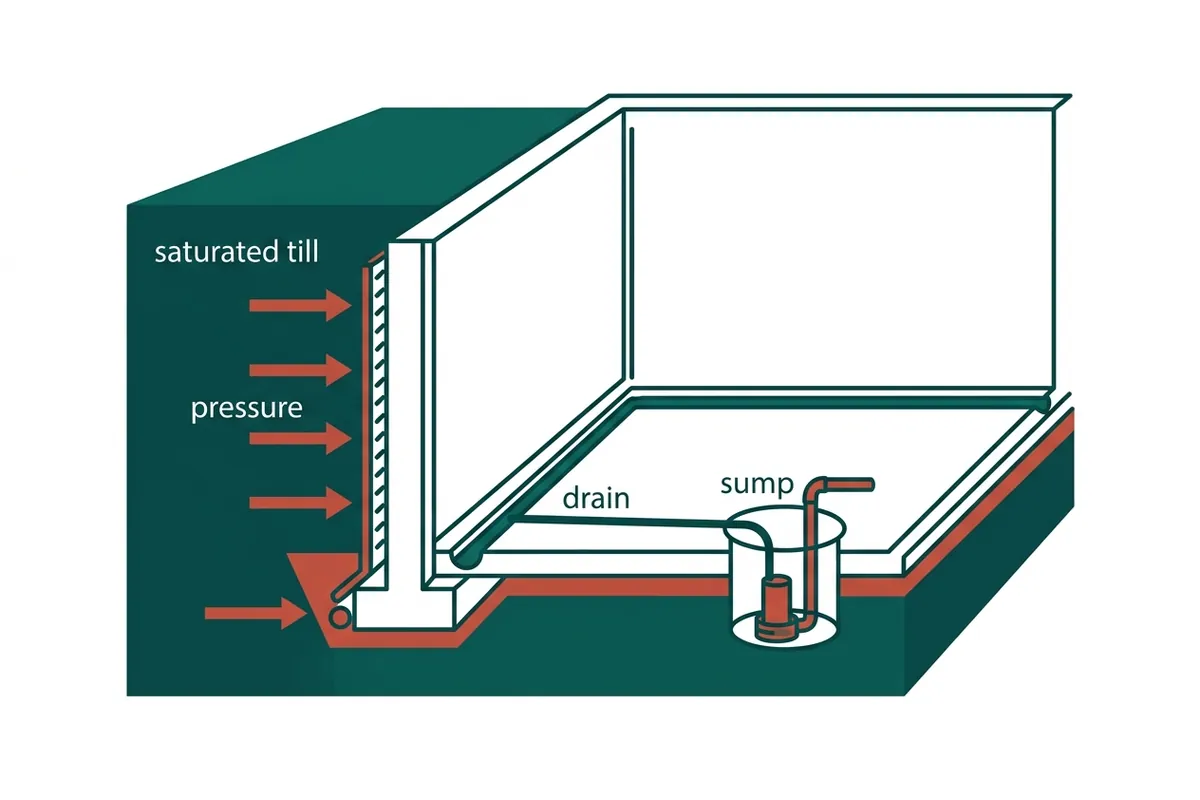
Indianapolis slab problems concentrate where builders' backfill meets glacial till: driveway edges, garage aprons, walk joints, patio corners — the trench-and-fill zones around every foundation that consolidate for a decade while the undisturbed till beside them doesn't move. Add the freeze cycle heaving slab edges each winter and re-dropping them each thaw, and you get the metro's signature stepped sidewalk panels and tilted aprons. Polyurethane lifting resets them in an afternoon: penny-sized ports, expanding foam, traffic the same day, $500–$2,500 against three-to-five times that for replacement.
The honest caveat mirrors the foundation story: foam fixes elevation, not water. A panel that sank because a downspout saturates its base will sink again unless the water moves — so slab scopes here name the water source next to the lift price, with the cheap correction first. And slabs still heaving seasonally get lifted in late spring, after the frost is done arguing.
Leveling questions, straight answers
What does concrete leveling cost in Indianapolis?
Most lifts — driveway sections, walks, patios, garage aprons — run $500-$2,500, roughly a third of tear-out replacement, and the slab takes traffic again the same day.
Why does my walk heave in January and sink in May?
That's the till-and-freeze duet: water under the slab freezes and jacks it up in winter, then the thaw leaves softened, washed-out bedding it settles back into — a little lower each year. Leveling refills the bed; sealing the joints and moving the downspout keeps it filled.
Foam or mudjacking for Indy slabs?
Foam wins most residential lifts here: penny-size ports, minutes to cure, and it neither washes out nor feeds the freeze cycle with new moisture. Slurry mudjacking still earns big-void, heavy-slab work. We quote what the slab needs, not what the trailer carries.
Can you level a garage slab that tips toward the foundation?
We can level a garage slab that tips toward the foundation, and it's worth doing sooner — a slab pitched at the house is delivering every rain to the foundation backfill, which is how slab problems audition to become basement problems. The lift corrects the pitch; caulked joints keep the water on the surface where the grade can shed it.
How long will the lift hold?
The foam is permanent; longevity is about the water. Joints sealed, downspouts relocated, grade corrected — do the ride-along items in the quote and the slab stays put. Skip them and winter resumes its wedge work on the same bed.
Get a free Indianapolis foundation evaluation
Tell us what the house is doing — cracks, a bowing wall, doors out of square, a wet basement — and we'll schedule an evaluation with photos and crack measurements. We reply the same business day.